
What is the difference between materials used in dental crowns
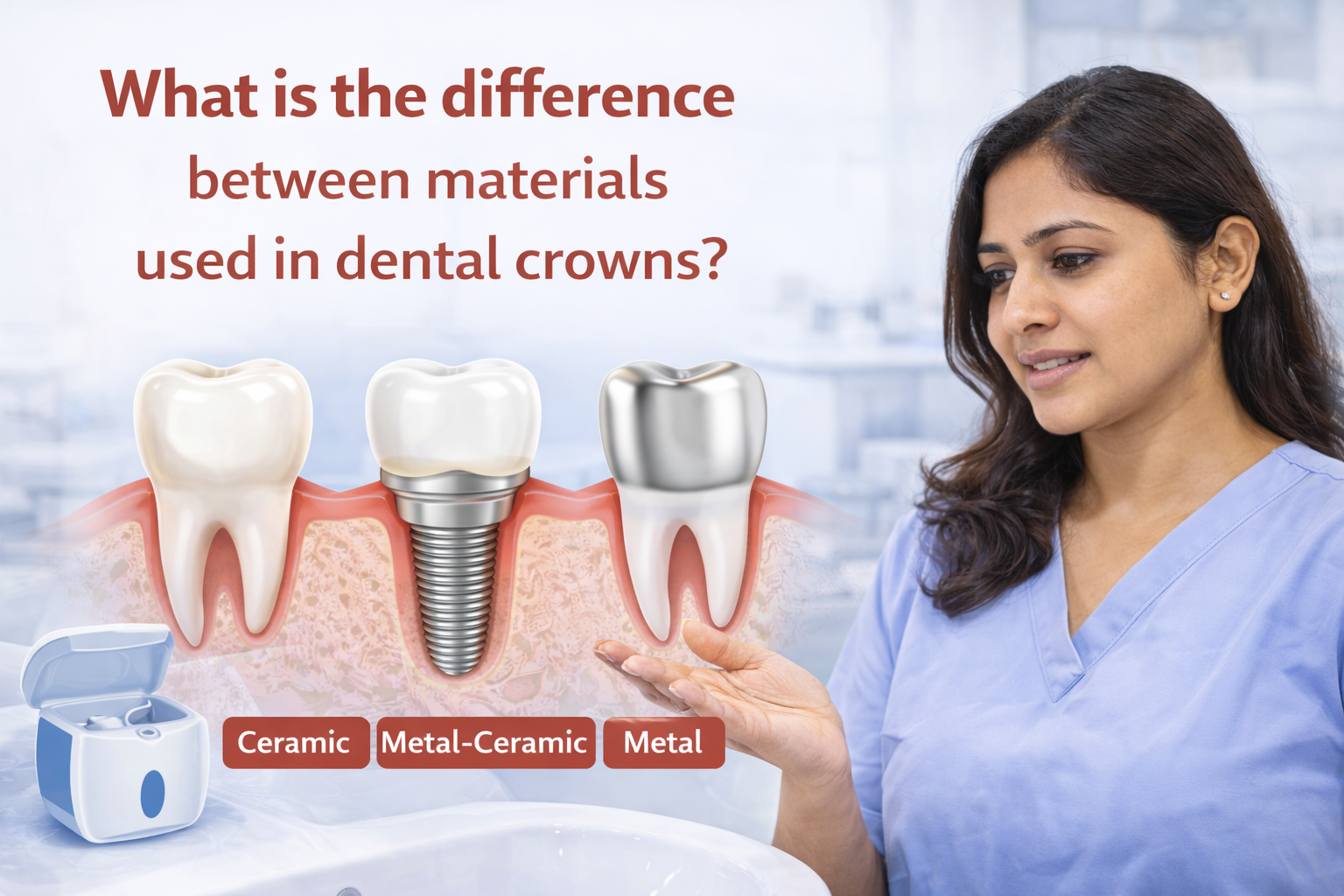
Dental crowns can be made from various materials, each with unique benefits and applications depending on the tooth’s location, aesthetic needs, and durability requirements. Here are the most common materials used in dental crowns:
Metal Crowns
Materials: Typically made from alloys like gold, platinum, or base-metal alloys such as nickel and chromium.
Benefits: Highly durable, resistant to chipping and breakage, and require minimal tooth removal.
Best for: Molars (back teeth) where strength is prioritized over appearance.
Porcelain-Fused-to-Metal (PFM) Crowns
Materials: Metal base with a porcelain overlay.
Benefits: Combines the strength of metal with the natural appearance of porcelain. The porcelain can be color-matched to surrounding teeth.
Best for: Front and back teeth, as it offers a balance of durability and aesthetics. However, the metal base may sometimes show a thin line at the gum line.
All-Ceramic or All-Porcelain Crowns
Materials: Entirely made of ceramic or porcelain.
Benefits: Provides the best color match and natural appearance and is suitable for people with metal allergies.
Best for: Front teeth where aesthetics are a priority, though they may not be as strong as metal-based crowns for high-biting forces.
Zirconia Crowns
Materials: Zirconia, a high-strength ceramic.
Benefits: Extremely durable and chip-resistant, with a natural look. They can also be color-matched and do not contain metal, making them a good option for people with allergies.
Best for: Both front and back teeth, especially for patients needing a durable and aesthetic solution.
E-max Crowns
Materials: Lithium disilicate, a type of glass-ceramic.
Benefits: Known for its strength and translucency, E-max crowns provide a highly natural appearance and are durable.
Best for: Front teeth or visible areas where aesthetics are important, as they offer a beautiful and realistic finish.
Resin Crowns
Materials: Made entirely from composite resin.
Benefits: Generally more affordable and can be color-matched to natural teeth, though they are less durable and more prone to wear and chipping.
Best for: Temporary crowns or for patients looking for a lower-cost option.

Each crown material has its pros and cons, so the choice often depends on factors such as the tooth’s location, budget, durability needs, and aesthetic preferences.
3 Comments
Finanappreciate your trust greatly Our clients choose dentace ducts because know we area follow
are the best area Awaitingare really.
Finanappreciate your trust greatly Our clients choose dentace ducts because know we follow
are the best area Awaitingare really.
Finanappreciate your trust greatly Our clients choose dentace ducts because know we follow
are the best area Awaitingare really.