
Indirect Pulp Capping (IPC)
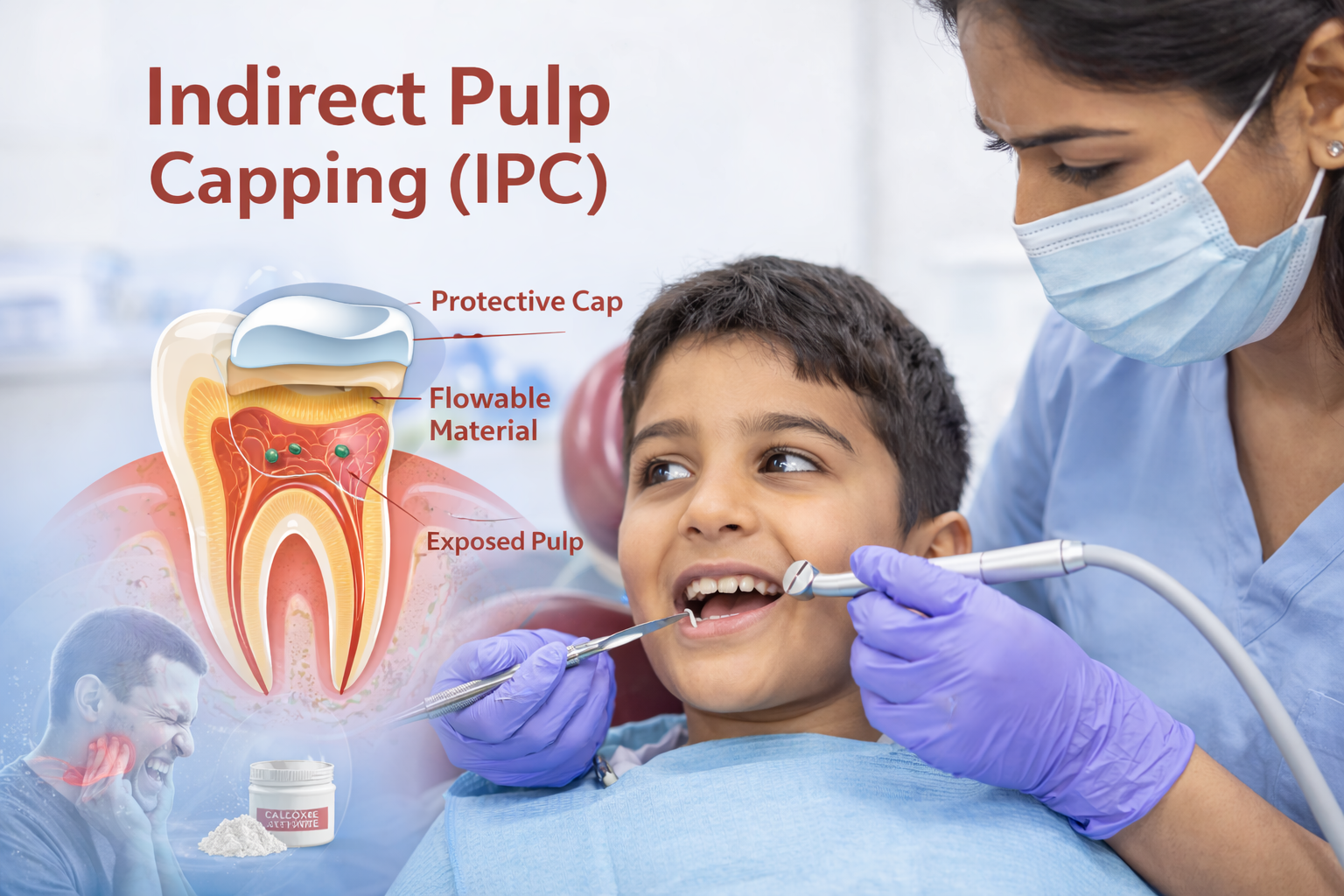
Indirect pulp capping is a dental procedure used to treat a tooth with deep decay that is close to the pulp, which is the innermost part containing nerves and blood vessels, but has not yet been exposed. The aim is to protect the pulp, promote healing, and avoid root canal treatment by allowing the tooth to repair itself.
In this procedure:
- Removal of Decay
The dentist removes most, but not all, of the decayed tissue. Leaving a thin layer of softened dentin, which is the part of the tooth beneath the enamel, helps avoid accidentally exposing the pulp. - Placement of Protective Material
A biocompatible material, often calcium hydroxide or mineral trioxide aggregate (MTA), is applied over the remaining dentin. These materials encourage the formation of reparative dentin, which helps protect the pulp from future irritation or infection. - Sealing
A temporary or permanent restoration, such as a filling, is placed over the protective layer to seal the tooth and prevent bacterial invasion.
Indirect pulp capping is generally performed on teeth with minimal symptoms and no signs of pulp inflammation. When successful, it can prolong the life of the tooth and reduce the need for more invasive dental treatments.