
What is flossing and is it really useful
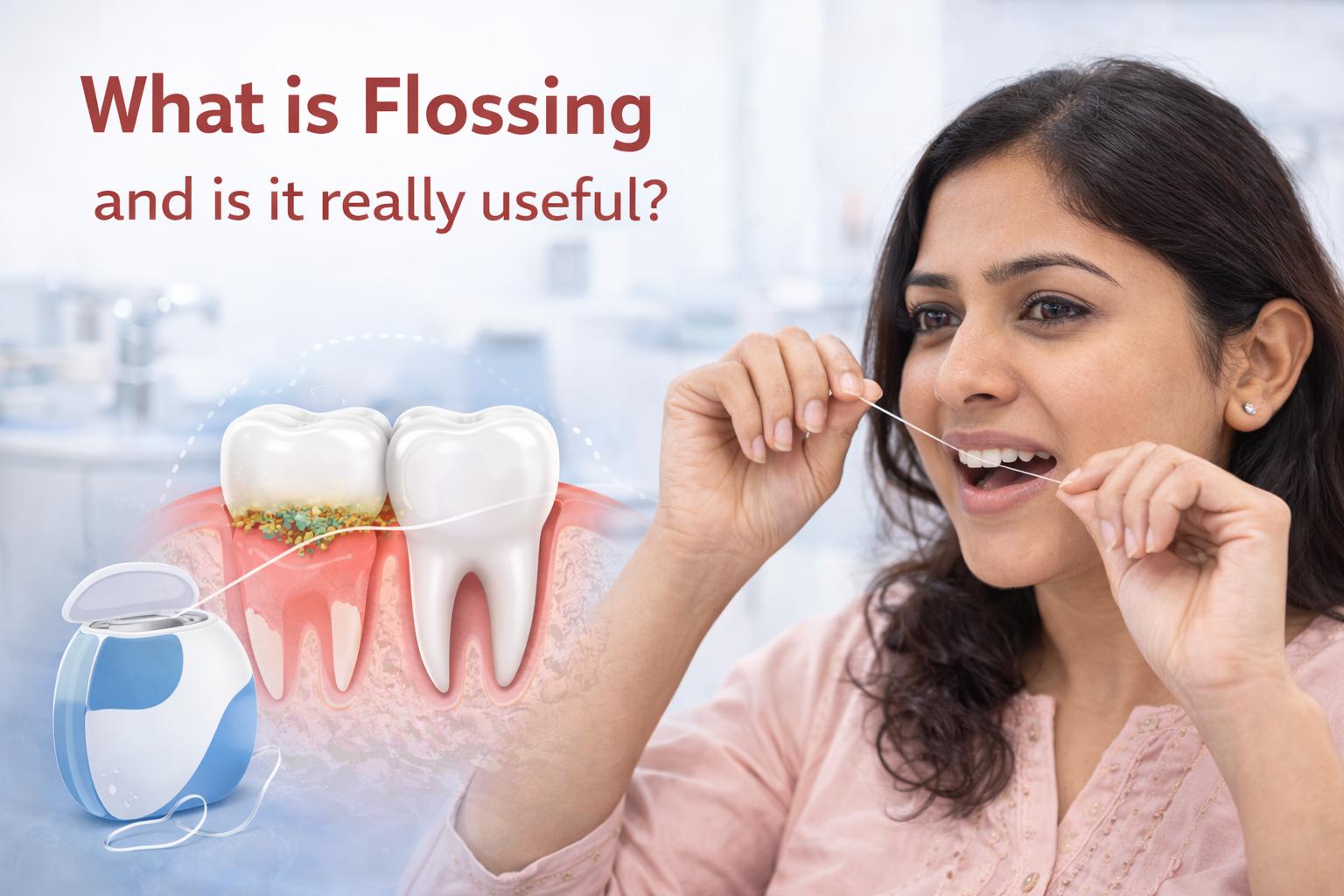
Flossing is a dental hygiene practice that involves using a thin piece of string (floss) to remove food particles and plaque from between the teeth and along the gumline, areas that a toothbrush may miss. The goal of flossing is to prevent the buildup of plaque, which can lead to gum disease such as gingivitis and periodontitis, tooth decay, and bad breath.
Benefits of Flossing
Removes Plaque Between Teeth
Flossing helps remove the thin, sticky layer of bacteria-laden plaque that can form between teeth.
Prevents Gum Disease
Plaque can harden into tartar, which irritates the gums and causes gingivitis. Regular flossing reduces plaque buildup and lowers the risk of gum disease.
Reduces Cavities
Food particles stuck between teeth can eventually cause cavities. Flossing reduces this risk by clearing away those particles.
Improves Breath
By removing trapped food and bacteria, flossing helps keep your breath fresher.

How Effective Is Flossing?
Research shows that while flossing alone doesn’t necessarily prevent cavities on the chewing surfaces of teeth, it does make a significant difference in reducing gum inflammation and plaque between teeth, especially when done consistently. Flossing is most effective when combined with regular brushing, and using mouthwash can provide additional protection.
If traditional floss is difficult to use, alternatives such as interdental brushes or water flossers can also be effective for cleaning between teeth.